Water treatment and aquaculture
Filter fabrics for aquaculture and water treatment
Bigman is the Sefar distributor in Sweden, Norway and Iceland and supplies filter fabrics for aquaculture and water treatment. Disc, drum and belt filters in fish farming use 10–100 µm PET fabrics in double-layer weave, SEFAR TETEX® DLW. For wastewater treatment and sludge dewatering there are fabrics for filter presses and belt filters.
- PET double-layer weave for disc, drum and belt filters
- 10–100 µm
- Mesh opening in Sefar monofilament fabrics
- 5–5,000 µm
- Thread diameter, monofilament
- 0.02–2 mm
- Salmon lice, according to the presentation
- 350 µm
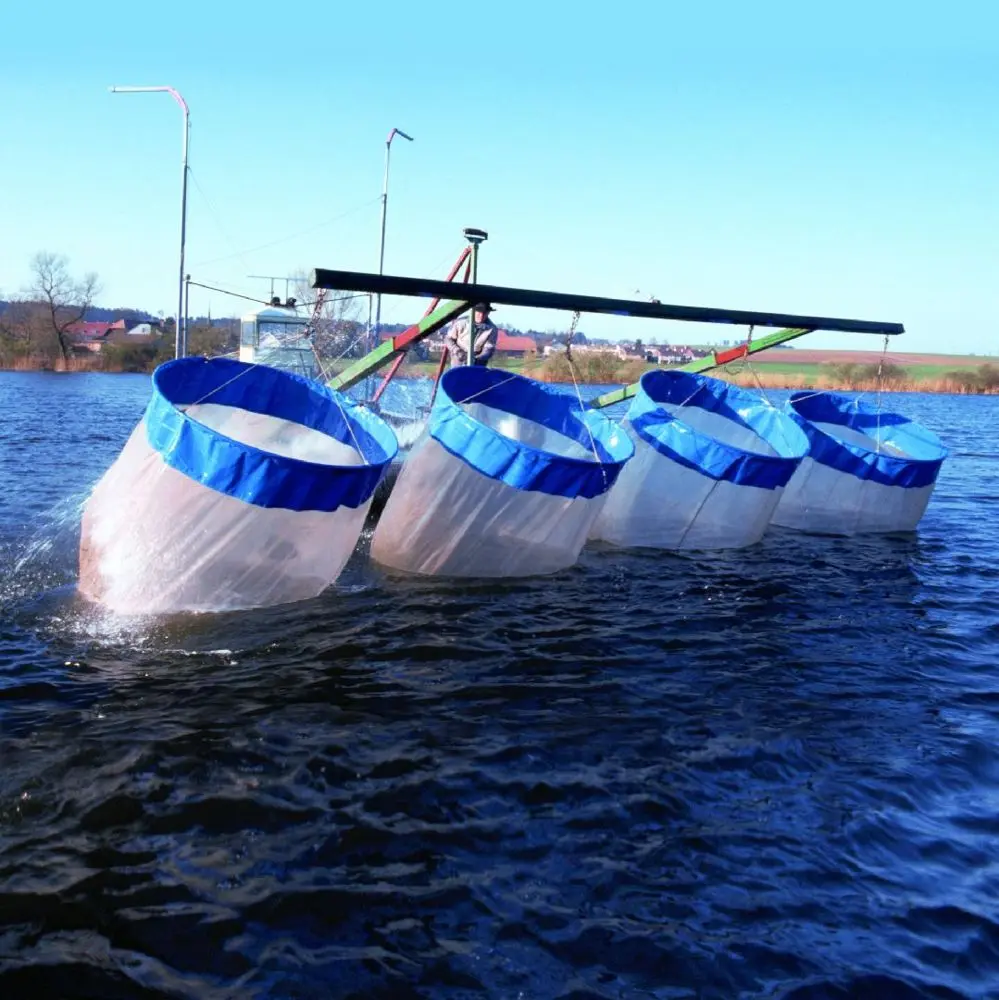
Filters are a central part of aquaculture
In fish farming, filter fabric is used both to clean the water and to handle the sludge. The Bigman presentation for aquaculture mentions:
- Sludge and water treatment.
- 10–100 µm PET fabrics in DLW design.
- Disc filters, drum filters and belt filters.
- Salmon lice: 350 µm fabric.
The presentation also shows fabric enclosures, fabric pens with floating collars and landing nets at fish farms.
SEFAR TETEX DLW, double-layer weave with drainage layer
DLW stands for double layer weave. It is a double-layer fabric in which a fine filter layer is woven together with an integrated drainage layer. Sefar describes how the combination of fine filtration and a mechanically stable drainage weave gives good filtration results and a longer service life.
For aquaculture, DLW is used in polyester (PET) at 10–100 µm. Bigman sells the fabric by the running metre or fabricated for your filter type.
Sefar monofilament fabrics
Sefar describes itself as the world’s leading manufacturer of monofilament precision fabrics for customer-tailored solutions in separating, coating and dosing. Sefar covers the whole chain from polymer pellets to yarn, fabric and finished products, and the weaving pattern is adapted to the customer’s application.
| Property | Value |
|---|---|
| Thread diameter | 0.02–2 mm (19–2,000 µm) |
| Mesh opening | 5–5,000 µm |
| Material | PET, PA, PP, PVDF and PEEK |
| Process steps | Spinning, weaving, finishing and fabrication |
The five materials in the Sefar material data
Polyester (PET) absorbs little moisture, 0.4%, and handles −75 to +150 °C dry. Polypropylene absorbs no moisture but withstands lower temperatures. According to Sefar, the values are for guidance and must be verified by testing.
| Material | Operating temperature, dry | Moisture absorption | Hydrolysis resistance |
|---|---|---|---|
| PET (PETP) | −75 to +150 °C | 0.4% | limited |
| PA 6.6 and PA 6 | −40 to +115 °C | 3.5–4.5% | good |
| PP | −30 to +90 °C | 0 | good |
| PVDF | 110 °C | 0.04% | good |
| PEEK | up to 250 °C | 0.1% | good |
More polymers, chemical resistance and the Sefar reservations are on the materials page.
Wastewater treatment and sludge dewatering
Sefar has fabrics for all applications in sludge dewatering, according to the filter press brochure. It mentions municipal and industrial wastewater treatment, galvanic treatment, automotive cataphoresis and metallic residue.
The Bigman presentation shows treatment plants with filter press cloths and belt filters. The Sefar overview brochure Process Filtration lists wastewater treatment, drinking water and aquaculture among its application areas.
Filter press
Sefar supplies fabrics for most types of filter press and has developed them together with the machine manufacturers.
- Calendered fabrics with special weaves give good cake release and a dry filter cake.
- Clear filtrate and good cleanability.
- Robust fabrics for abrasive slurries and heavy cakes.
- The Sefar laboratory carries out suspension analysis, particle size distribution and customer-specific filtration tests, and recommends a filter medium.
Vacuum belt filters
Filter belts in SEFAR TETEX DLW and SEFAR TETEX MLW are used in wastewater treatment, recycling, waste incineration and synthetic FGD gypsum, among other applications. The pore sizes are 7–160 µm. According to Sefar, the double-layer weave gives lower filtrate turbidity and better cake washing than single-layer belts.
- DLW Classic: the widest choice of polymers and pore sizes.
- DLW HC (High Capacity): more pores and higher air permeability, for a drier cake and higher flow.
- DLW HD (Heavy Duty): heavily reinforced double-layer weave for the largest installations.
- MLW (Multi Layer Weave): up to 50% higher mechanical strength and service life than DLW Classic.
| Material | Maximum temperature, wet |
|---|---|
| PP | 75 °C |
| PET | 90 °C |
| E-CTFE | 110 °C |
| PEEK | 140 °C |
Fabrication of filter belts
Filter belts are supplied ready-made with a closure and edges that fit the machine. Sefar lists these options for vacuum belt filter belts:
- Metal clipper closure in various grades, with overlap or underlap, and optional velcro.
- Reinforced closure area and sealing thread for a particle-tight closure.
- Heat cut and coated edges.
- Marking of cake side and running direction.
Mining and refining
The Bigman presentation also covers mining and refining, with filter presses and filter cloths. Read more about fabrics for filter presses and vacuum belt filters on the process filtration page.
How Bigman can help
Bigman has worked with filter media since 1970 and advises on material, mesh opening and weave to suit your filter type and process. The fabric is supplied by the running metre or as fabricated parts. Parts we have developed for you can be stocked in Spånga, and the lead time is given once the product has been developed.
Frequently asked questions
Which fabric is used in drum filters for fish farming?
The Bigman presentation gives 10–100 µm PET fabrics in double-layer weave, SEFAR TETEX DLW, for disc, drum and belt filters.
What does DLW mean?
Double layer weave, a double-layer fabric with an integrated drainage layer. It combines fine filtration with a mechanically stable drainage weave.
Can Bigman supply ready-made fabrics for our filter type?
Yes. We supply fabric by the running metre or fabricated. Parts developed for you can be stocked in Spånga.