Vacuum belt filters
Filter belts for vacuum belt filters and vacuum belt dryers
Sefar manufactures filter belts in double and multi layer weave, SEFAR TETEX® DLW and SEFAR TETEX MLW, for horizontal vacuum belt filters. Pore sizes range from 7 µm to 160 µm in PP, PET, E-CTFE and PEEK. For vacuum belt dryers there is SEFAR TETEX DRY in PET and PPS for up to 180 °C.
- pore size, SEFAR TETEX DLW and MLW
- 7–160 µm
- higher strength, MLW compared with DLW Classic
- up to 50%
- max. temperature in wet operation, PP to PEEK
- 75–140 °C
- SEFAR TETEX DRY in PPS for vacuum belt dryers
- up to 180 °C
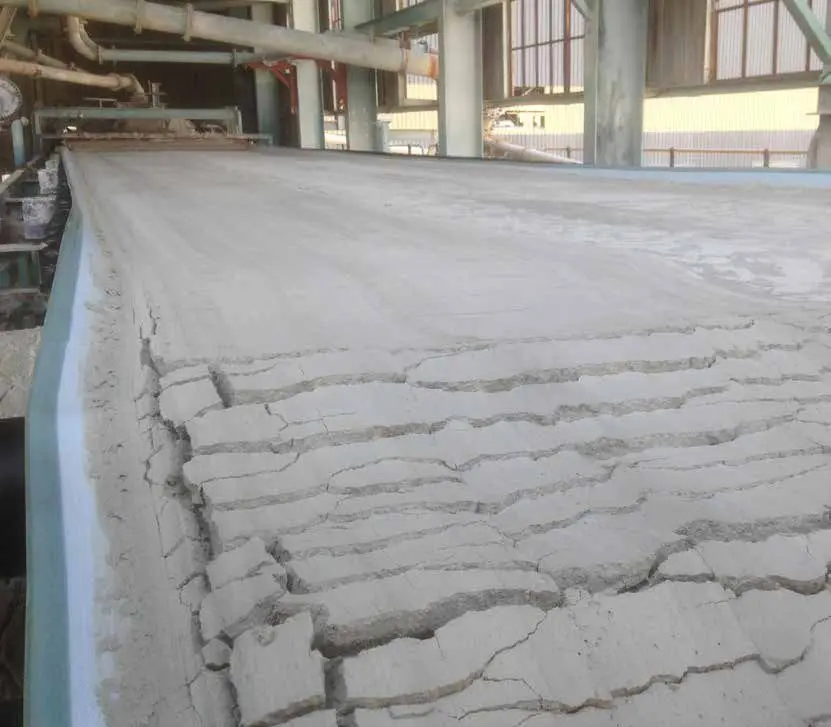
Filter belts for horizontal vacuum belt filters
According to Sefar, belts made of SEFAR TETEX DLW and SEFAR TETEX MLW are the first choice of leading manufacturers of horizontal vacuum belt filters. Sefar states high separation efficiency and a long, trouble-free service life.
The belts combine two functions in the same cloth: fine filtration and a mechanically stable drainage layer. They suit continuous and discontinuous belt filters, as well as rubber belt filters.
Double layer weave compared with single layer weave
In a double layer weave, two different fabric layers are mechanically joined during weaving. Compared with a single layer belt, this gives high vertical and lateral liquid flow and good resistance to creasing and mechanical stress, according to Sefar.
| Property | Fine single layer belt | Coarse single layer belt | SEFAR TETEX DLW |
|---|---|---|---|
| Filtration | Fine | Coarse | Fine |
| Throughput | Low | High | High |
| Filtrate turbidity | Low | High | Low |
| Belt strength | Weak | Strong | Strong |
| Active filter area | Reduced | Reduced | Improved |
Four product lines
Sefar has four product lines for vacuum belt filters. DLW Classic has the widest selection, DLW HC gives the highest flow, DLW HD is reinforced for large installations and MLW has the highest mechanical strength.
| Product line | Construction | Benefits according to Sefar |
|---|---|---|
| SEFAR TETEX DLW Classic | Widest selection of polymers and pore sizes | Suits most process conditions, high throughput and stable production rate, better cake washing and clearer filtrate than single layer belts, better drainage than conventional filter belts |
| SEFAR TETEX DLW HC (High Capacity) | Maximised number of pores, higher air permeability | Higher throughput at the same particle retention, better cake dewatering, lower cake moisture, better washing, lower operating cost |
| SEFAR TETEX DLW HD (Heavy Duty) | Heavily reinforced double layer weave with a stronger support layer | Better stability in the largest belt filter installations, fine filtration combined with long service life |
| SEFAR TETEX MLW (Multi Layer Weave) | Multi layer weave, Sefar's stiffest construction | Strongest filter cloth for vacuum belt filters, up to 50% higher mechanical strength and service life than DLW Classic |
Materials and temperature
Sefar weaves the belts from PP, PET, E-CTFE and PEEK. The table shows the maximum recommended temperature in wet operation and which product lines are available in each material, with Sefar's article IDs.
| Material | Max. temperature, wet operation | Product lines | Characteristics |
|---|---|---|---|
| Polypropylene (PP) | 75 °C | DLW Classic 05-8000, DLW HC 05-8800, DLW HD 05-8100, MLW 05-9000 | Organic solvents may limit use |
| Polyester (PET) | 90 °C | DLW Classic 07-8001, DLW HC 07-843X, DLW HD 07-8004 | Good resistance to most solvents. DLW HD has improved hydrolysis resistance |
| E-CTFE | 110 °C | DLW Classic 08-8000 | Best corrosion stability |
| PEEK | 140 °C | DLW Classic 17-8000 | High process temperatures and best chemical resistance |
A heat-resistant finish is available on request. Sefar states that the assessment depends on local process conditions and on chemical and thermal interaction.
Process requirements that govern the choice of belt
Sefar works from six requirements when a filter belt is chosen.
| Requirement | What Sefar offers |
|---|---|
| Chemical resistance | The right polymer for acid or alkali: PP, PET, E-CTFE or PEEK |
| Temperature | Materials that keep their performance throughout their service life, even at critical temperatures such as cake post-drying |
| Mechanical load | DLW HD and MLW for heavily loaded and extra-large filters, with the best belt tracking and the longest service life |
| Suspension properties | Pore size 7–160 µm according to particle retention and filtrate clarity |
| Filtration capacity | Maximised number of pores and optimised permeability, DLW HC for a drier cake or higher efficiency |
| Installation | Proven closure systems from particle-tight to chemically resistant, no extra installation equipment needed |
Closures and edges
Sefar delivers the belt ready-made with closure and edge. The closure is installed quickly and easily and, according to Sefar, does not depend on the operator.
| Design | Details | Benefit |
|---|---|---|
| Closure | Metal clippers in various grades, reinforced closure area | Quick installation, high process compatibility, robust and long-lasting |
| Particle-tight closure | Overlap or underlap, sealing thread in the closure area | Easy installation, low particle loss, industry proven |
| Edge | Heat cut and coated edges, marking of cake side and running direction | No fraying, better belt tracking, correct installation |
Flap options and when they are used
- Metal clipper with overlap sewn on, Velcro optional: for regular continuous and discontinuous belt filters with no scraper or a scraper that is not sharply adjusted.
- Metal clipper with underlap sewn on, no Velcro: for continuous rubber belt filters with a sharply adjusted scraper.
- Metal clipper with trailing flap made from the belt, Velcro optional: for regular continuous and discontinuous belt filters with no scraper or a scraper that is not sharply adjusted.
Reference applications
| Industry | Applications according to Sefar |
|---|---|
| Chemicals | Amino acids, ABS resin, calcium carbonate, catalysts, fertilisers, polymers, pigments, PTA, soda ash, sodium bicarbonate, zeolites |
| Minerals | Base and precious metal concentrates and tailings, chemical alumina, coal, lithium brine, phosphate rock and phosphoric acid, potash, rare earths, uranium |
| Environment | Recycling, synthetic FGD gypsum, waste incineration, waste water treatment |
| Life sciences | Active pharmaceutical ingredients (API), agrochemicals, nutraceuticals |
| Food | Citric acid, glutamate, lactic acid, lecithin, lignin, spirulina, vanillin |
Laboratory and technical support
Sefar has application laboratories that reproduce and improve the customer's filtration process. Local subsidiaries in 26 countries provide technical service.
- Process optimisation
- Suspension analysis
- Particle size distribution
- Customer-specific filtration tests
- Filter medium recommendation
- Root cause and failure analysis, for example SEM analysis of scaling on the filter cloth
SEFAR TETEX DRY: belts for vacuum belt dryers
SEFAR TETEX DRY is Sefar's belt for vacuum belt dryers, which are used for gentle drying of large volumes, mainly in the food industry. The belts are precision woven fabrics in open or dense weave made of PET or PPS. Sefar has supplied belts for vacuum belt dryers for more than 40 years.
Properties
Because the fabric is open, water from cleaning does not condense under the belt when the dryer is restarted. The steam passes through the fabric, which puts less stress on the fabric and makes the belt ready for operation sooner.
| Property | What Sefar states |
|---|---|
| Permeability | Steam penetrates the fabric so that no bubbles form. Works at dry solids contents above 30% |
| Mechanical stability | Low shrinkage and elongation, good belt tracking, service life of up to 18 months, up to 180 °C |
| Shorter downtime | Quick installation with an efficient closure system, suitable for CIP cleaning |
| Resistance to clogging | Smooth surface that releases the product easily and reduces particles getting stuck in the pores |
| Food safety | All components meet food requirements throughout their service life |
PET or PPS
PET is the standard choice and suits most products, especially food. PET is recommended up to 140 °C. Between 140 and 160 °C PET works, but Sefar advises against it because the service life is shorter and the belt stretches more.
PPS is chosen for more demanding products, for example with salt, herbs or certain chemicals, and when the drying temperature needs to be 140–180 °C.
Technical data
| Article | Material | Thickness | Weight | Air permeability |
|---|---|---|---|---|
| SEFAR TETEX DRY 07-3015-RLX | PET | 1,200 µm | 840 g/m² | 2,500 ± 700 l/(m²·s) |
| SEFAR TETEX DRY 07-3015-K RLX | PET | 1,050 µm | 840 g/m² | 750 +250/−150 l/(m²·s) |
| SEFAR TETEX DRY 07-3201-SK RLX | PET | 770 µm | 635 g/m² | 100 ± 50 l/(m²·s) |
| SEFAR TETEX DRY 25-3015-RLX | PPS | 1,400 µm | 840 g/m² | 2,500 ± 700 l/(m²·s) |
| SEFAR TETEX DRY 25-3015-K RLX | PPS | 900 µm | 840 g/m² | 750 ± 150 l/(m²·s) |
Food regulations
The fabrics in SEFAR TETEX DRY RLX are made of yarn that contains only substances approved for food contact. Sefar refers to the following regulations:
- FDA 21 CFR 177.1630 for PET and 177.2490 for PPS
- Regulation (EC) No 1935/2004 on materials and articles intended to come into contact with food
- Regulation (EU) No 10/2011 on plastic materials and articles intended to come into contact with food
Edges and closures
The standard design is a taped edge and a metal clipper Alligator with seam. A welded edge is also available, and Sefar's overview brochure mentions a sewn edge, a heat cut and pressed edge and a clipper closure. Other edge and closure designs are available on request.
Applications
- Plant extracts
- Malt beverages
- Cocoa mass
- Bakery products (yeast)
- Fruit juice concentrates
- Pharmaceutical extracts
- Basic chemicals
- Special nutrition
- Hydrolysed vegetable proteins (HVP)
Filter belts from Bigman
Bigman has been Sefar's distributor in Sweden, Norway and Iceland since 1970. We help you choose product line, material and pore size for your process, and we deliver the belt ready-made with closure and edge.
- Customer stock in Spånga for belts we have developed for you.
- The lead time is set once the product has been developed.
Frequently asked questions
What pore sizes are available for vacuum belt filters?
Sefar belts in SEFAR TETEX DLW and MLW are available with pore sizes from 7 µm to 160 µm. DLW Classic has the widest selection of pore sizes.
Which material withstands the highest temperature in a vacuum belt filter?
PEEK, with a maximum of 140 °C in wet operation. E-CTFE handles 110 °C, PET 90 °C and PP 75 °C. A heat-resistant finish is available on request.
Should we choose PET or PPS for our vacuum belt dryer?
PET is the standard choice and is recommended up to 140 °C. PPS is chosen for products with salt, herbs or certain chemicals and for temperatures of 140–180 °C.