Filter press
Filter cloths for filter presses
Sefar manufactures filter cloths for filter presses in the process industries, developed together with the machine manufacturers. Calendered cloths with special weaves give easy cake release, a dry filter cake and clear filtrate. We supply the cloths by the metre or fully fabricated.
- chemicals, minerals, environment, life sciences and food
- 5 industries
- cloths that meet food requirements
- FDA and EU
- Sefar's programme for pharmaceuticals
- PHARMA GMP
- all production in-house at Sefar
- Yarn to cloth
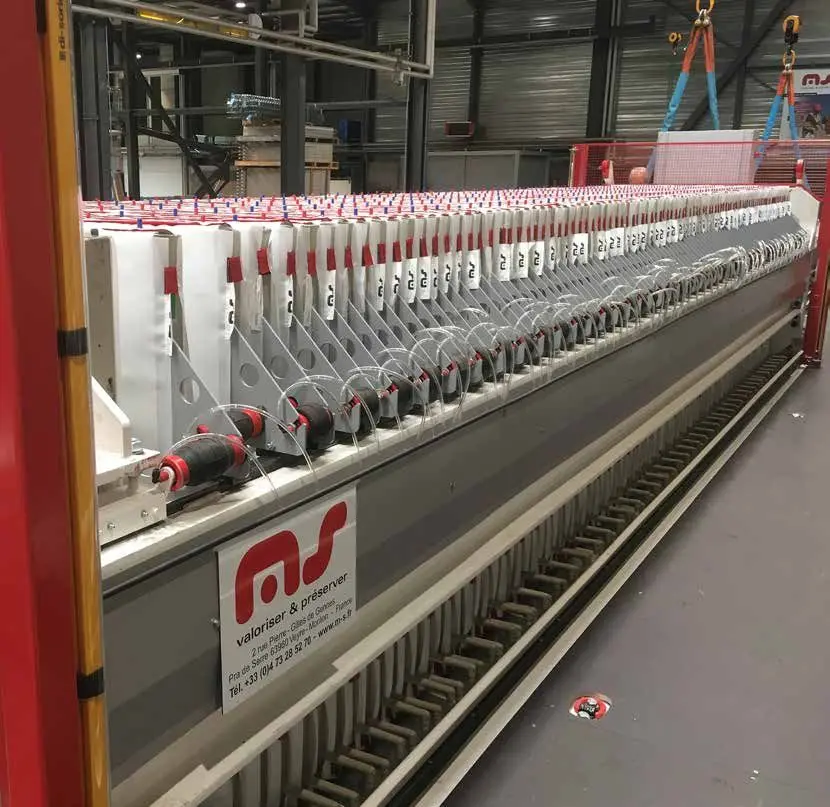
Cloths developed together with the machine manufacturers
Sefar supplies filter cloths for filter presses in the process industries. The cloths are developed to meet customers' needs, and Sefar has long collaborated with the machine manufacturers (OEMs) to optimise each customer's process. According to Sefar, the result is a perfect fit in the press and an integrated solution from one supplier.
Sefar has developed a special range of filter media and fabrication techniques to get the most out of the filter press. Local subsidiaries provide technical service for the filter press solutions.
Properties of Sefar filter press cloth
Sefar divides performance into two parts: the cloth properties and the filtration results. The cloth properties come from the choice of polymer, yarn, weave and cloth design. The filtration results come from special weaves and a high degree of calendering.
| Area | How it is achieved | What you get |
|---|---|---|
| Cloth properties | Carefully selected polymers, yarns, weaves and cloth design | Right chemical resistance, optimum mechanical stability, perfect fit, compliance with food requirements |
| Filtration results | Special weaves and a high degree of calendering | Excellent cake release, optimum cleanability, clear filtrate, dry filter cake |
Calendered cloths for better cake release
Sefar shows in its brochures that standard cloths give poor cake release, while Sefar's calendered cloths give optimum cake release. Calendering is combined with special weaves, and together, according to Sefar, they give a dry filter cake, clear filtrate and good cleanability.
Sefar highlights best chemical and mechanical stability, optimum cake release and solutions that meet FDA and EU food requirements as the main benefits for filter presses.
Filter press cloth by industry
Sefar describes the requirements and applications for five industries. The table summarises what Sefar writes about each industry.
| Industry | What Sefar promises | Applications |
|---|---|---|
| Chemicals | High performance even in aggressive conditions: extreme pH, high temperatures, solvents, oxidants, acids and alkalis | Pigments, colours, silicates, zeolites, polymers |
| Minerals | Strong woven cloths, the right pore size for the application, resistance to abrasive slurries and heavy cakes | Red mud and alumina, iron ore, tailings (zinc, nickel, gold), phosphoric acid, chalk, gravel, cement, titanium dioxide, kaolin and clay, coal |
| Environment | A solution for every sludge dewatering application | Municipal and industrial waste water treatment, galvanic treatment, automotive cataphoresis, metallic residue |
| Life sciences | Verifiable traceability. Sefar controls yarn production, weaving and fabrication up to the finished filter. SEFAR PHARMA GMP meets the regulatory requirements for pharmaceuticals | Blood separation, pharmaceuticals |
| Food | Cloths with FDA or EU compliance and consistent supply even during seasonal production peaks | Cane and beet sugar, edible oil, wine, beer, gluten, alginate, enzymes, citric acid |
From in-house yarn to finished filter press cloth
Sefar writes that it is the only manufacturer that still produces from its own yarn to the finished product, which secures quality from start to finish. The brochure shows six production steps:
- Yarn production
- Weaving
- Finishing
- Fabrication: coating
- Fabrication: laser cutting
- Fabrication: sewing
Fabrication details
Sefar's overview brochure shows fabricated filter press cloths with non-metallic eyelets. Fabrication covers coating, laser cutting and sewing.
Laboratory and technical support
Sefar has a fully equipped laboratory with standard and custom-built equipment that reproduces the customer's filtration process. Particle size analysis and filtration tests are carried out there.
- Suspension analysis
- Particle size distribution
- Customer-specific filtration tests
- Filter medium recommendation
- Process optimisation
Material selection for filter press cloth
The filter press brochure does not state which polymers the cloths are woven from, only that they are carefully selected for the right chemical resistance. Sefar's general material data gives guide values for the most common polymers.
| Material | Dry working temperature | Acids | Alkalis |
|---|---|---|---|
| Polypropylene PP | −30 to +90 °C | Good | Good |
| Polyester PET | −75 to +150 °C | Good | Limited |
| Polyamide PA 6.6 | −40 to +115 °C | Limited to poor | Good |
| PEEK | up to 250 °C | Good | Good |
| PTFE | up to 240 °C | Good | Good |
The values usually apply at 20 °C and are for guidance. Sefar requires laboratory and field tests before industrial use. We help you choose a cloth for your slurry and your press.
Filter press cloth from Bigman
Bigman has been Sefar's distributor in Sweden, Norway and Iceland since 1970. We supply filter press cloth by the metre or as finished cloths made to your drawing or your original.
- Advice on material and weave for your process and press.
- Customer stock in Spånga for cloths we have developed for you.
- The lead time is set once the cloth has been developed.
Frequently asked questions
What makes a calendered filter press cloth better than a standard cloth?
Sefar combines special weaves with a high degree of calendering. According to Sefar, this gives excellent cake release, optimum cleanability, clear filtrate and a dry filter cake. According to Sefar, standard cloths give poor cake release.
Are there filter press cloths for food and pharmaceuticals?
Yes. Sefar supplies filter press cloths with FDA or EU food compliance, and the SEFAR PHARMA GMP programme meets the regulatory requirements for pharmaceuticals.
Can the cloth be tested against our slurry before we change?
Sefar's laboratory reproduces the customer's filtration process and carries out suspension analysis, particle size distribution and customer-specific filtration tests, and then recommends a filter medium.